

Few commercial relationships react to public opinion as quickly as a celebrity endorsement. A single interview answer, a social media repost, or a line of dialogue can turn a personal statement about Taiwan into a market-wide question about risk within hours. That describes how the endorsement business works across the Taiwan Strait rather than passing judgment on any particular statement. Political identity and consumer sentiment are closely linked in the region, and brands build that link into their decisions.
This article explains the mechanics behind the headlines. It covers why comments about Taiwan carry commercial weight, how endorsement contracts handle controversy, what consumer pressure campaigns look like, how Taiwan regulates its own entertainers who work across the strait, and what generally happens next.
Why a comment about Taiwan can carry commercial weight

Beijing’s stated position is the one-China principle, which holds that Taiwan is part of China. The State Council’s Taiwan Affairs Office said in November 2025 that adhering to the one-China principle and the 1992 Consensus is essential for improving cross-strait relations and maintaining stability in the Taiwan Strait, according to Xinhua reporting on the briefing. Taiwan’s government rejects that framing and describes the Republic of China as a sovereign state. Both are official positions rather than fringe views, and public figures who work across the strait can be pressed, directly or indirectly, to align with one of them.
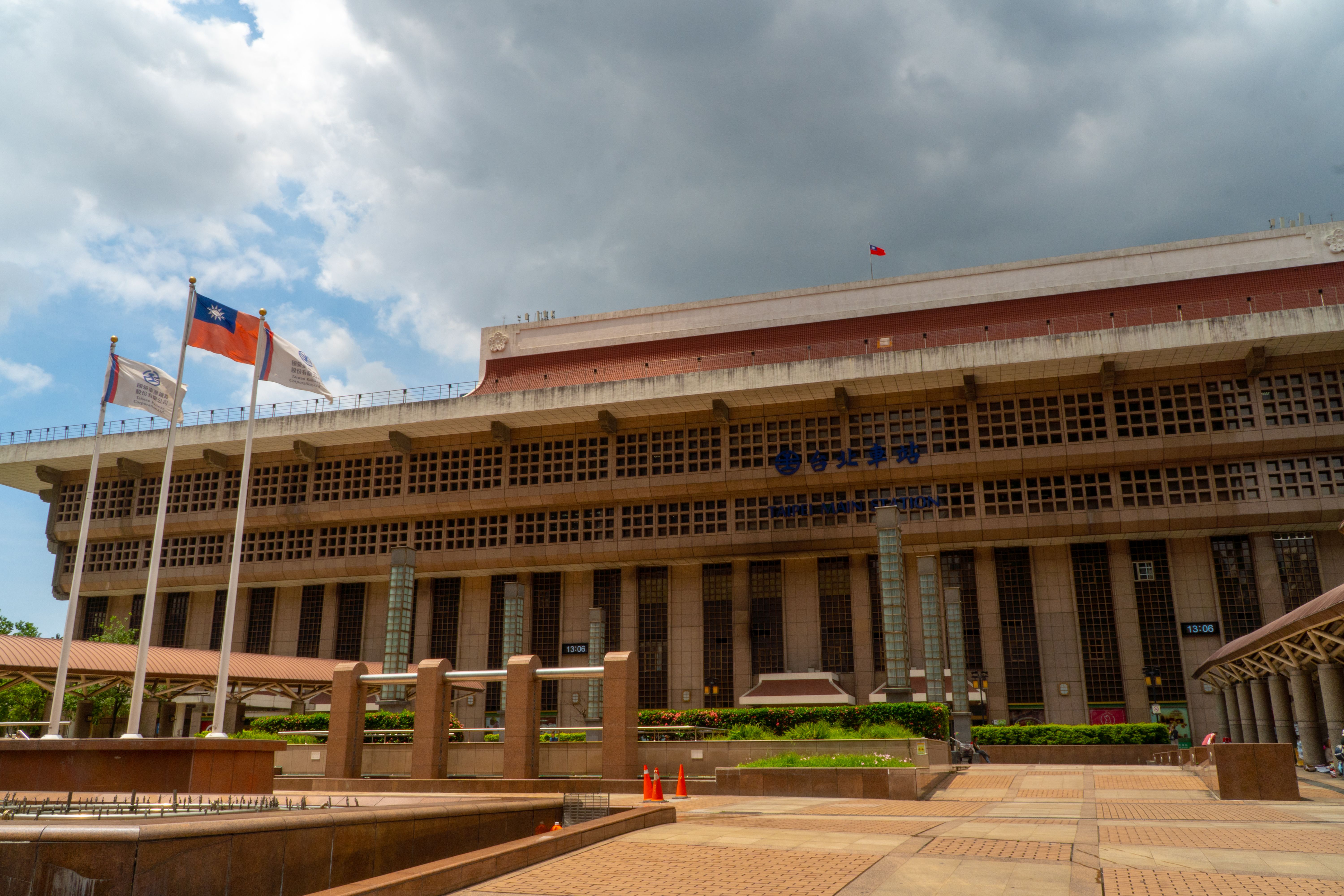
Statements about Taiwan’s status regularly draw international news coverage and formal responses from governments, which is one reason the subject travels well beyond entertainment pages. For a brand, the practical point is not which position is right. It is that the same sentence can read as loyalty to audiences in one market and as a provocation to audiences in another.
Entertainers are not the only people who face this dynamic. Athletes, authors, and business figures who sell products across the strait run into the same calculations. What makes celebrity cases visible is the speed: endorsements are public by design, so a shift in sentiment shows up almost immediately in comment sections and in the advertisements that quietly disappear.
The contract behind the handshake

Endorsement relationships are contracts, and most are drafted with controversy in mind. A common provision is the morals clause, sometimes called a conduct or morality clause. A 2016 note in the NYU Journal of Intellectual Property & Entertainment Law defines it as a contractual provision giving one party, usually the brand, the unilateral right to terminate an agreement or take punitive action if the other party engages in conduct that may damage their public image and, by association, the brand’s image.
These clauses are not new. The same note traces them to Hollywood in the 1920s, and records that studios used them during the late 1940s and 1950s to address political expression as well as personal conduct. In advertising, the underlying rationale is often described as protecting against “meaning transference,” the idea that negative feelings toward a spokesperson can attach to the product they endorse.
Scope varies widely. Some clauses cover only a criminal charge or conviction, while others are broad enough to include conduct that brings the talent into public disrepute or offends a significant portion of the public. Remedies are negotiated too, and legal commentary written by practitioners describes the usual set: a right to terminate, a possible pro-rata refund or retention of fees based on unused services and remaining usage rights, and an end to the brand’s use of the talent’s name and likeness.
Termination is not automatic, and courts do not treat a broad clause as unlimited discretion. In a 2012 U.S. federal case, an athlete’s endorsement agreement let the brand terminate for conduct that could bring him into disrepute. The court held that the discretion still had to be exercised in good faith and that whether the public response actually met the contractual standard was a question of fact for a jury. Decisions like that one help explain why modern agreements often spell out trigger periods, cure periods, and whose reaction counts.
The mainland market at a glance
Market size is a large part of why these disputes attract so much attention. The China Film Administration reported that the mainland’s annual box office rose to about 51.83 billion yuan in 2025, roughly 7.37 billion U.S. dollars, with attendance of 1.238 billion and domestic films taking close to four-fifths of revenue, according to Xinhua’s summary of the official figures. For brands whose campaigns run on both sides of the strait, that scale shapes how much weight a single market’s reaction carries.
| Indicator | 2025 figure | Change from 2024 |
|---|---|---|
| Total mainland box office | 51.83 billion yuan (about US$7.37 billion) | +21.95% |
| Urban cinema admissions | 1.238 billion tickets | +22.57% |
| Domestic films’ share of box office | 79.67% | Slightly higher than 2024 |
| Cinema screens nationwide | 93,187 | Net increase of 2,219 screens |
Source: China Film Administration data released January 1, 2026, as reported by Xinhua. Figures will be revised with subsequent annual releases.
A large market does not automatically dictate an outcome. Brands weigh revenue, contract terms, campaign timing, and the durability of public sentiment. A short-term campaign that has already ended may produce a very different calculation from a multi-year ambassadorship with a launch still ahead.
Taiwan’s regulatory response
Taiwan has its own rules on cross-strait activity, and they apply to people as well as companies. Article 33-1 of the Act Governing Relations Between the People of the Taiwan Area and the Mainland Area prohibits individuals and organizations in Taiwan from engaging in certain cooperative activity of a political nature with mainland political, military, or administrative bodies without permission. Article 90-2 sets a fine of NT$100,000 to NT$500,000, which can be imposed repeatedly.
In 2025, Taiwan’s Mainland Affairs Council and Ministry of Culture investigated entertainers who had reposted Chinese state media statements about Taiwan. In August 2025 the council said 23 entertainers had been verbally warned, and it described the probe as the first of its kind, according to a Central News Agency report. Officials framed the process as a way to give entertainers grounds to decline requests from Chinese authorities. No penalties had been imposed at that stage, and the council said regulations would continue to apply if similar cases arose.
On the mainland, a different set of rules and market dynamics applies, including state oversight of broadcasting and online content. The practical result is that artists working across the strait can face scrutiny from more than one direction, which is one reason many talent agencies now build political risk into their representation strategies.
How consumer pressure campaigns form

When a controversy starts, the pressure tends to arrive in a recognizable sequence: comment threads flooding a brand’s social accounts, calls to remove or replace an ambassador, screenshots circulated across platforms, and sometimes an explicit boycott pledge. International reporting described exactly this pattern in September 2025 after a scene in a Korean drama angered Chinese viewers, with several global brands removing the actress from their Chinese social media accounts. Her agency told a Korean broadcaster that the affected campaigns had ended before the show was released, a reminder that contract timing can matter as much as the controversy itself.
These campaigns vary in intensity. The same audience that pressures one brand may ignore another, and many brands wait to see whether the reaction persists before taking an expensive step. Pressure is also not one-directional. Audiences elsewhere sometimes push back against the pushback, defending the artist or criticizing the brand for yielding.
Fan reactions cut both ways

Fans are not a single bloc, and a statement that alienates one audience can strengthen another. For a performer with a strong regional following, a controversy may cost some ticket sales or sponsorships while deepening loyalty among supporters who share the position. Brands and talent managers try to estimate the net effect, but the exercise is genuinely uncertain, because the same event can be interpreted in opposite ways in different communities.
That uncertainty is why many disputes are resolved quietly. A campaign ends, an ambassador’s page is updated, and neither side issues a detailed statement. The absence of a formal announcement does not necessarily mean nothing happened.
How brands and talent typically manage the risk
Risk management in this area is largely about preparation. On the brand side, common steps include market-specific due diligence on a spokesperson’s public record, clear conduct language tied to defined standards, and internal review before campaigns launch. On the talent side, representatives increasingly negotiate narrower conduct clauses, cure periods, or reciprocal “reverse” morals clauses that allow the artist to exit if the brand becomes the source of reputational harm.
None of this removes the risk. It distributes it more precisely. The drafting choices made long before a controversy erupts usually determine how much freedom each side has when one does, and they explain why two similar situations can produce two very different outcomes.
Frequently asked questions
Do celebrities automatically lose brand deals over comments about Taiwan?
No. Outcomes depend on the contract, the markets involved, the timing of the campaign, and how long public reaction lasts. Some deals end early, some are allowed to lapse naturally, and some continue.
What is a morals clause in an endorsement contract?
It is a provision that lets a brand terminate, or take other action, when the other party’s conduct may damage their public image or the brand’s reputation. Its scope and its remedies are negotiated case by case.
Can an artist be sued after a deal is terminated?
Yes, sometimes. Either side can dispute whether a termination was justified. Courts have generally held that a broad termination right is still subject to an obligation of good faith, and the question of whether public reaction met the contractual standard can become a factual dispute.
What is a reverse morals clause?
It flips the usual arrangement. Instead of only the brand being able to exit, the artist can terminate if the brand engages in defined negative conduct. Such clauses are increasingly requested but are not universal.
Does Taiwan penalize entertainers for pro-Beijing posts?
Taiwan’s Article 33-1 restricts certain political cooperation with mainland bodies, and Article 90-2 provides for fines of NT$100,000 to NT$500,000, repeatable. In the 2025 investigation, officials said entertainers received verbal warnings rather than fines.
Why does the mainland market matter so much to brands?
It is one of the largest entertainment and consumer markets in the world, with 2025 box office of roughly 51.83 billion yuan and 1.238 billion cinema admissions. For many global brands, it is too significant to ignore, which raises the stakes of any political controversy.
Do all fans react the same way?
No. Audiences in different markets often interpret the same statement differently, and some supporters rally to an artist precisely because of a controversy. Net effects are difficult to predict in advance.
How this article was put together
This explainer draws on the China Film Administration’s 2025 figures as reported by Xinhua in January 2026, the text of Taiwan’s cross-strait regulations and the Mainland Affairs Council’s 2025 investigation as reported by the Central News Agency, and legal scholarship and practitioner commentary on morals clauses in endorsement agreements. The political positions of both governments are described as each side states them rather than as our characterization. Market figures are annual and will be revised. Contract outcomes vary by jurisdiction and by the specific agreement, so nothing here should be read as legal advice.